Factory Audit in China: What Should Be Checked
A factory tour shows you a factory. An audit should answer whether that factory can handle your order.
Quick Answer
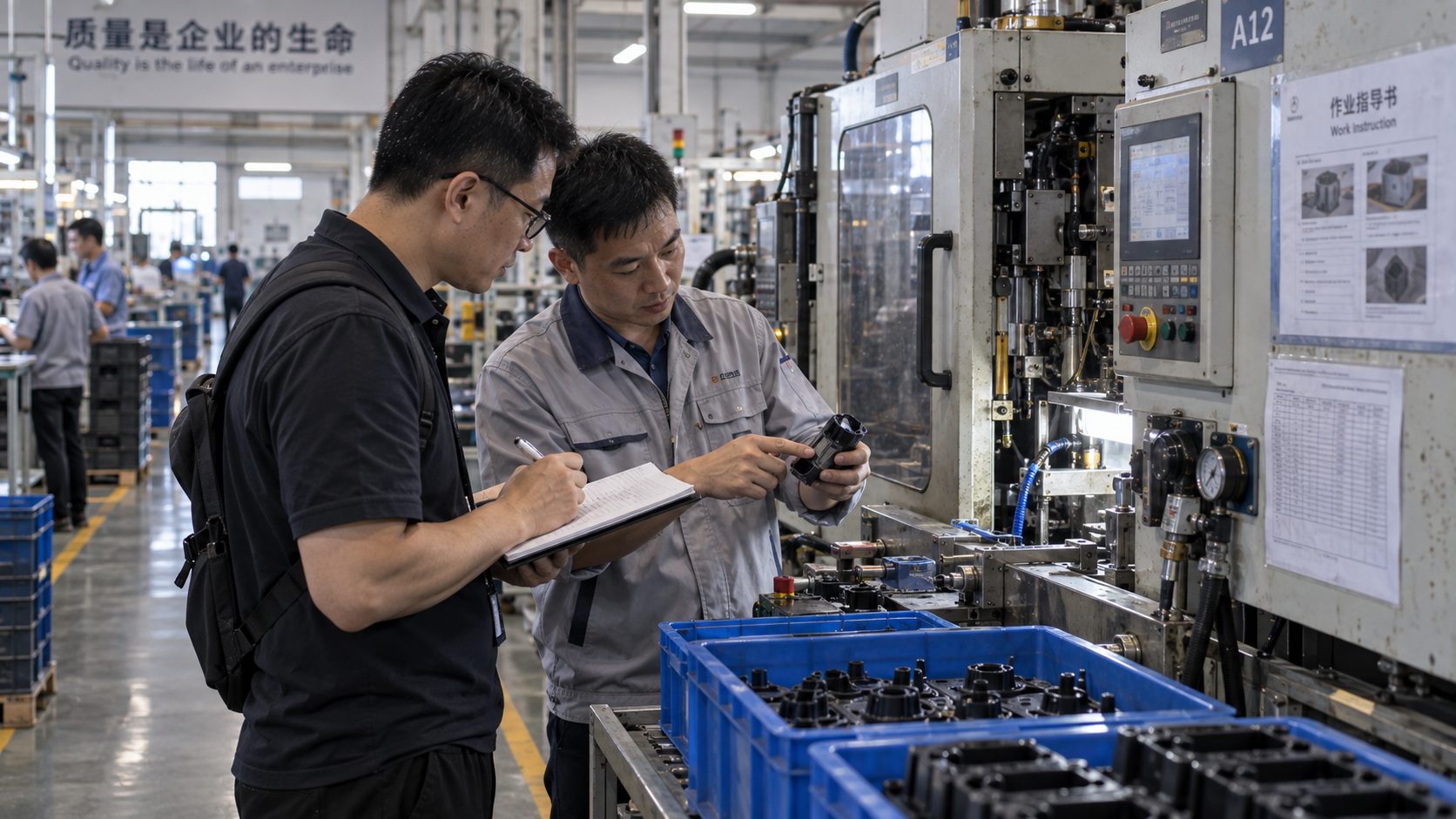
A useful factory audit follows the product through the facility: incoming materials, storage, production, inspection, nonconforming goods and packing. The checklist should be adapted to the product and order. The audit should also test real capacity, identify subcontracted processes and collect evidence that the quality system is used in daily production.
From the China side
The reception room tells us almost nothing. We start paying attention when the factory tour reaches incoming material, work-in-progress, measuring equipment and the place where failed product is supposed to go.
Practical reference
| Audit area | Evidence to look for | Typical question |
|---|---|---|
| Incoming material | Supplier labels, incoming checks, lot identification | How is wrong or unapproved material stopped? |
| Production | Relevant machines, fixtures, work instructions, WIP | Which critical processes are in-house? |
| Measurement | Gauges, calibration status, inspection records | Can the factory measure the critical requirement? |
| Nonconforming product | Segregation, records, disposition process | What happens after a failed check? |
| Packing | Approved pack standard, labels, finished-goods storage | Can approved goods be mixed or damaged before shipment? |
A polished reception area is not production capability. Neither is a row of machines photographed from the doorway.
A useful factory audit starts before anyone arrives at the gate. The buyer should already know what has to be true for the order to work: process, equipment, capacity, quality controls, subcontracting, traceability, packaging or something more specific to the product.
What should a factory audit in China cover?
Generic audit checklists have a place. They stop obvious areas from being forgotten. But a factory making upholstered furniture and a factory machining precision shafts should not receive the same emphasis.
For furniture, material storage, moisture control, finishing, assembly, hardware and packaging may dominate. For machined parts, the interesting questions may be machine type, fixtures, calibration, measurement equipment, tool management and control of outsourced surface treatment.
The product changes what you look for.
How should you walk a factory during an audit?
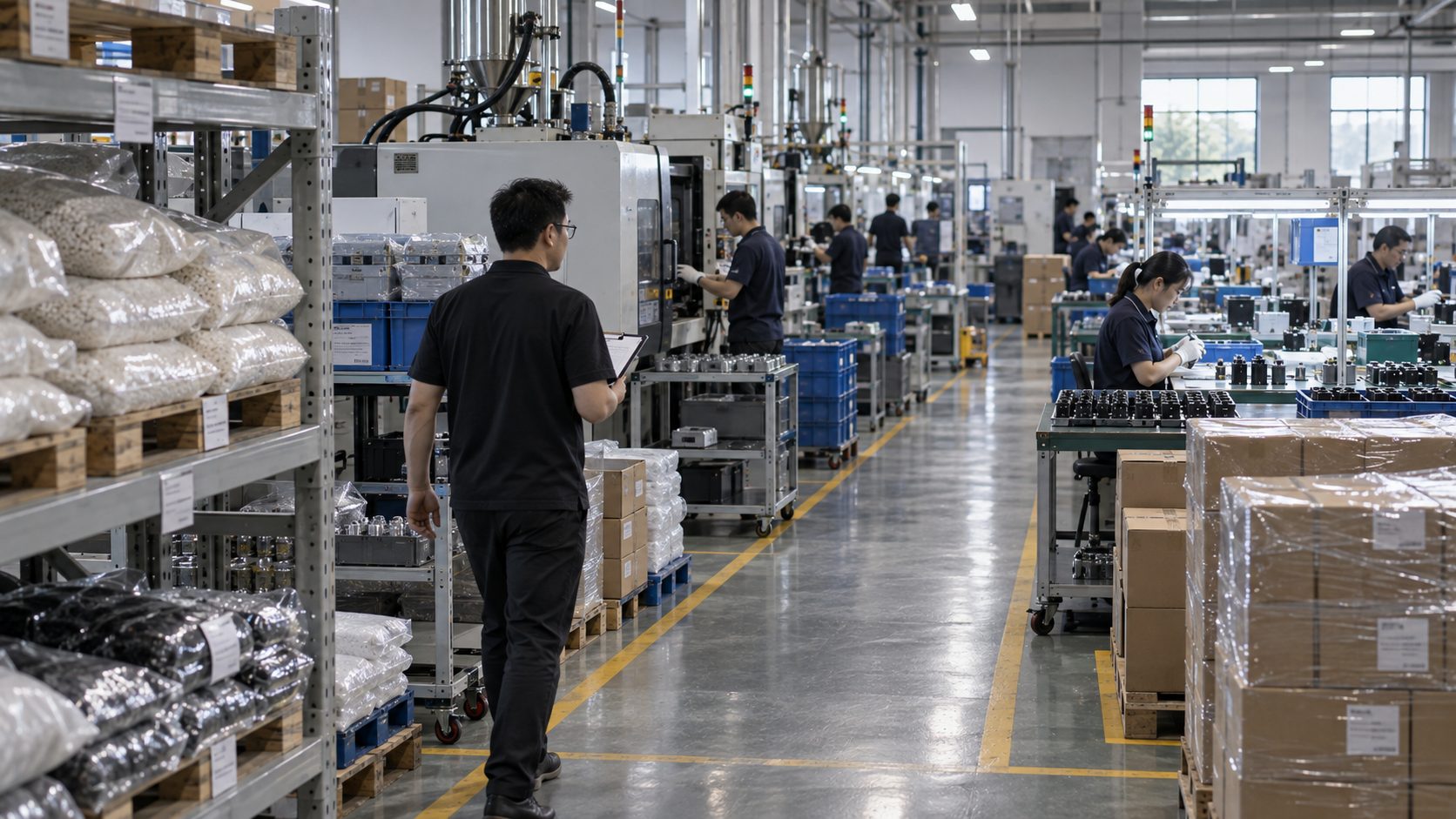
One of the simplest ways to make an audit more useful is to follow the product rather than the factory's preferred tour route.
- Incoming material: what arrives, how it is identified and how it is checked.
- Storage: whether material and work-in-progress are protected and traceable.
- Production: which steps are in-house, which machines are used and where bottlenecks appear.
- Inspection: what is checked, with what equipment, at which stage and against which criteria.
- Nonconforming product: what happens when something fails.
- Packing and finished-goods storage: whether approved product can still be damaged, mixed or mislabelled before shipment.
This sequence also makes subcontracting harder to hide accidentally. If a process disappears between two production steps, ask where it happens.
How do you verify factory capacity?
Factories often quote monthly capacity. The number is only useful if you understand what limits it.
A line may theoretically produce 100,000 units per month but already be committed to other customers. A single mould, curing stage, test station or skilled manual operation may set the real ceiling. Seasonal labour can change the answer again.
Rather than asking only 'What is your capacity?', ask what equipment and shifts the number assumes, what current utilisation looks like and which process is the bottleneck for your product.
How do you check whether a factory quality system is working?
A quality manual is easy to show. A working system leaves evidence in daily operations: incoming inspection records, calibration status, work instructions, inspection points, nonconformance records, sample retention, traceability labels and people who can explain what happens when a result is out of tolerance.
You are not looking for paperwork for its own sake. You are checking whether the factory can notice a problem before you do.
What evidence should a factory audit report include?
An audit report should make it possible for someone who was not present to understand the finding. 'Machine available' is weak. A photograph plus machine type, quantity, observed condition and relevance to the required process is better.
The same applies to problems. A picture of a messy shelf is not automatically a major finding. Explain what was stored there, why it matters to the product and what risk it creates.
What can a factory audit not prove?
A factory can pass an audit and still make a bad batch. The audit is a capability and system check at a point in time. It does not replace production control or inspection of finished goods.
That distinction is useful commercially. If the uncertainty is 'Can this factory plausibly do the job?', audit it. If the uncertainty is 'Did this batch meet our agreed requirements?', inspect the batch.
Have a factory you want checked? Factory Audit →. Related: Quality Control