Golden Sample: The Reference That Stops Production Arguments
The sample on your desk is useful only if the factory knows exactly which sample it is supposed to reproduce.

Quick Answer
A golden sample works only when it is a controlled reference. Give it a version, approval date and photos; link it to the correct drawing, BOM, artwork and packaging specification; and state which characteristics the physical sample controls. Keep changes under version control so the buyer, factory and inspector are working from the same reference.
From the China side
"Same as sample" is one of those phrases that sounds reassuring until three samples exist. We want to know which sample, approved when, against which drawing revision, and which characteristics are controlled by the physical unit.
Practical reference
| Reference | What it should control |
|---|---|
| Golden sample | Appearance, feel, assembly and other agreed physical characteristics |
| Drawing | Dimensions, tolerances, geometry and technical notes |
| BOM | Approved components and material references |
| Artwork | Print content, position, colours and revision |
| Packaging specification | Pack method, labels, carton and accessories |
| Change log | Approved deviations and the date/version from which they apply |
A buyer approves a sample. Production starts six weeks later. The first finished units arrive and something feels wrong: the plastic is glossier, the fabric is stiffer, the logo is slightly smaller.
The factory's answer is simple: 'This is the same as the sample.'
Now both sides have a memory of what was approved, but no controlled reference.
How do you create a controlled golden sample?
A 'golden sample' is not valuable because it is perfect. It is valuable because both sides agree that a specific physical unit represents the approved result for defined characteristics.
That sounds trivial until several samples have travelled between buyer, sales office and factory. Sample V2 may have the right colour but old packaging. V3 may have the new logo but the wrong material. The production team may never have seen the unit the buyer approved.
The first job is therefore identification.
- Give the approved sample a version or reference number.
- Record the approval date.
- Photograph it clearly, including labels and packaging.
- Link it to the drawing/specification revision.
- State which characteristics the sample controls and which are controlled by written specification instead.
- Where practical, keep matching retained samples with buyer and factory.
What should a golden sample control - and what should stay in the specification?
A physical sample is excellent for colour, feel, assembly, appearance and details that are awkward to describe. It is poor at communicating hidden dimensions, material chemistry, tolerances, test requirements or changes that cannot be seen.
If the drawing says 12.00 ±0.05 mm and the sample happens to measure 12.04 mm, the approved requirement is still the drawing tolerance, not 'make every part exactly like this one'.
The strongest production reference is usually a controlled package: approved sample plus drawings, BOM, artwork, packaging specification and test requirements.
What does "same as sample" need to mean?
Ask what that phrase means.
Same colour under which lighting? Same material grade? Same coating thickness? Same print position within what tolerance? Same packaging or only same product?
If an attribute matters enough to reject production, try to make it measurable before production.
When should the golden sample be used during production?
The golden sample should not spend the whole order locked in a cabinet waiting for final inspection.
It can be used at first-article approval, line setup, in-process checks and pre-shipment inspection. If the product starts drifting, finding that drift on day two is cheaper than documenting it on day twenty.
How should production changes be approved and recorded?
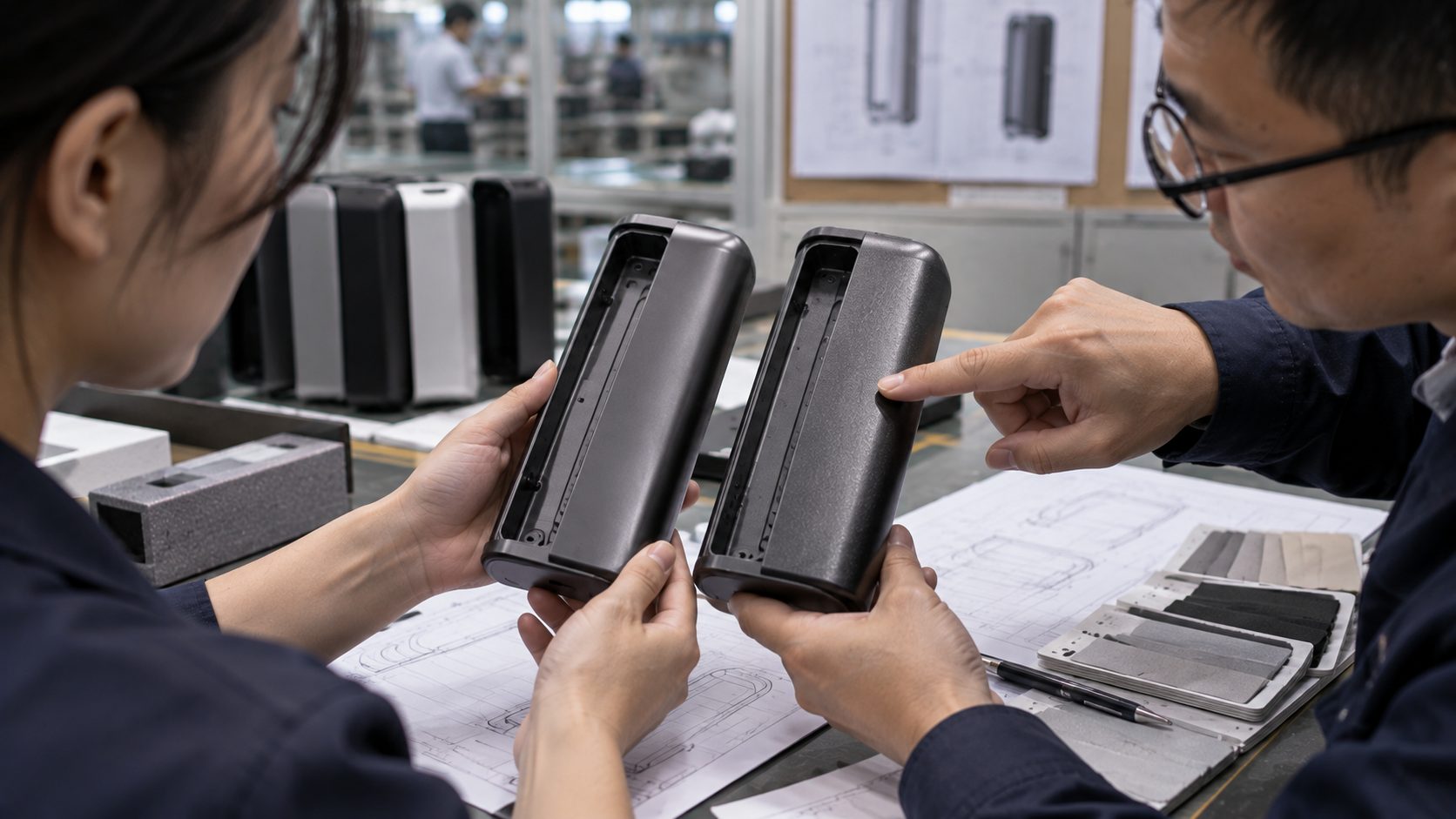
A factory asks to change a zipper, adhesive, resin, screw or carton because the original component is unavailable. The replacement may be completely acceptable.
What creates trouble is approving the change in a chat message and leaving the old sample/specification as the formal reference.
If a change is accepted, update the controlled reference. Otherwise the factory, inspector and buyer can each be correct against a different version.
Why should the buyer, factory and inspector use the same reference?
The point is not bureaucracy. It is to make approval portable. A production manager who never joined the sales call should be able to see what was agreed. An inspector arriving months later should be able to test against the same reference.
That is when 'same as sample' stops being a memory and becomes a production instruction.
Need production kept aligned with the approved reference? Production Support →. Related: Quality Control