MOQ in China: What Can Be Negotiated
MOQ is often presented as a fixed number. In practice it is usually the visible result of several different minimums.
Quick Answer
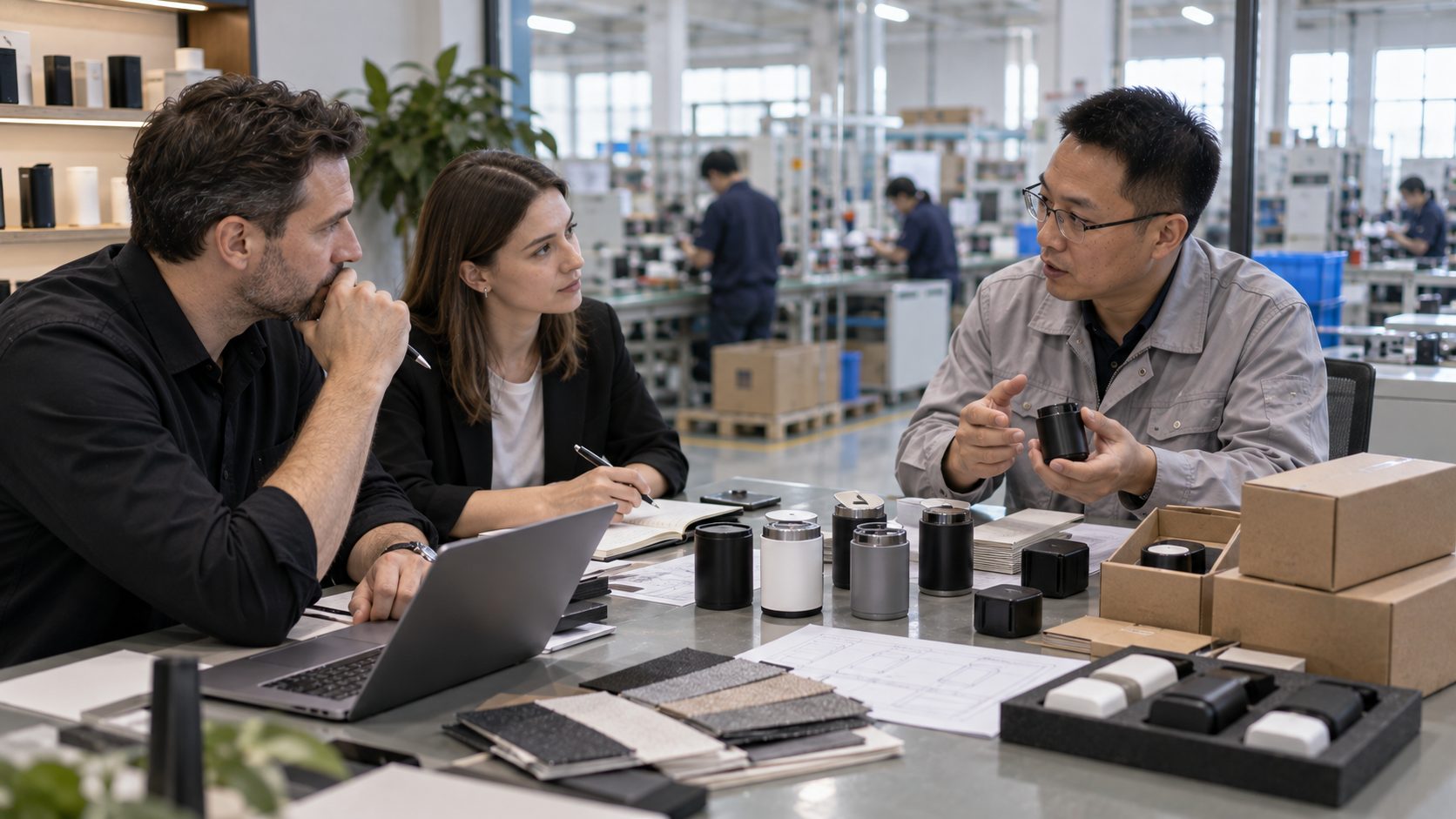
To negotiate MOQ, first identify what creates it. The constraint may come from machine setup, raw-material minimums, custom colour, printed packaging, scheduling or the supplier's commercial minimum. Lower quantities become easier when you can absorb a setup charge, use stock material, simplify packaging or join an existing production run.
From the China side
Asking "Can you do 300 instead of 1,000?" often produces a yes/no answer. Asking "What prevents you from doing 300?" produces information. Once the constraint is visible, you can decide whether to pay for it, redesign around it or choose another supplier.
Practical reference
| MOQ source | Typical reason | Possible lever |
|---|---|---|
| Machine / line setup | Fixed time or setup cost | Pay setup separately or accept higher unit price |
| Raw material | Upstream mill/resin/fabric minimum | Use stock material/colour or buy and hold excess |
| Packaging | Printer/carton supplier minimum | Use neutral packaging + labels or hold excess |
| Custom component | Supplier minimum for a part | Use standard component or redesign |
| Scheduling / margin | Order too small to justify production slot | Combine with another run or change quantity |
The supplier says MOQ: 1,000 pieces.
The buyer needs 300.
The usual response is to ask, 'Can you lower the MOQ?' That is the right commercial question and the wrong diagnostic question.
First find out what is creating the minimum.
Why do Chinese factories have MOQs?
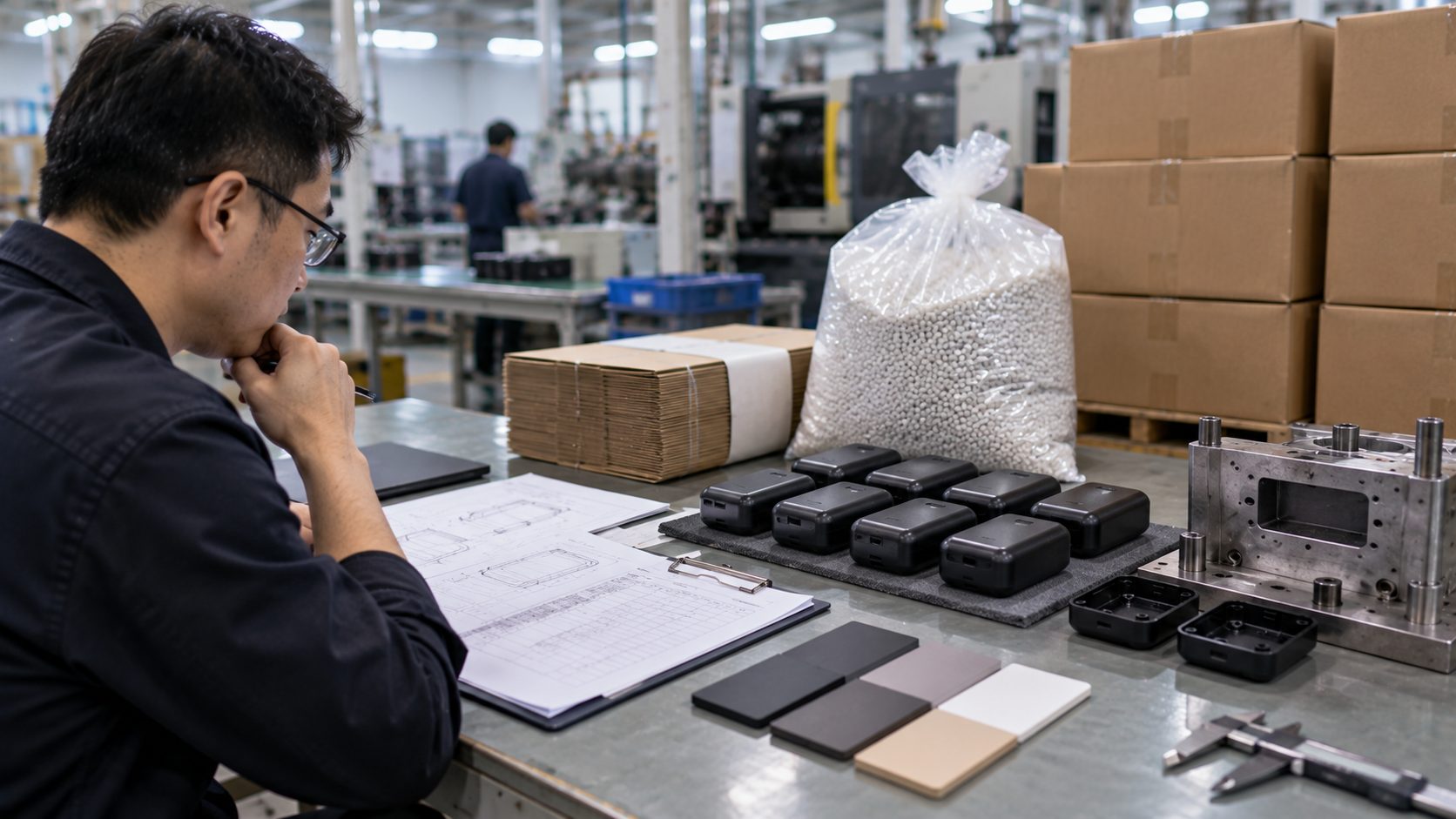
A factory can have a production MOQ, a material MOQ, a packaging MOQ and a commercial minimum that makes the order worth scheduling. They do not always point to the same number.
A printed carton supplier may require 1,000 boxes even if the product factory can run 300 units. A resin supplier may sell material in a quantity that covers 2,000 pieces. A custom colour may require a minimum batch. A machine setup may take four hours whether you make 200 units or 2,000.
Once you know the constraint, negotiation becomes less theatrical.
How can you negotiate a lower MOQ in China?
- Pay the setup cost separately. If the minimum exists because fixed setup cost is being spread across the run, a higher unit price or setup charge may solve it.
- Use standard material or colour. The factory may accept a smaller run if it can draw from material already in stock.
- Simplify custom packaging. Neutral cartons, labels or later-stage customisation can remove a packaging supplier's MOQ.
- Combine production. If the factory already runs the same base product for another order, it may be able to add your quantity under the right conditions.
Which MOQ constraints are difficult to negotiate?
Some minimums are physical or upstream. If a material mill requires a minimum production batch, your assembly factory cannot make that constraint disappear by being friendly.
Likewise, custom moulds, dies, printing plates and certification work may make a tiny first order economically irrational even when the factory agrees to it.
A suspiciously easy MOQ reduction can also mean the specification changed somewhere else: stock material instead of custom material, existing packaging instead of printed packaging, or a trader combining your order with another source.
How does MOQ affect unit price?
Buyers often expect 500 units to cost roughly twice the unit price of 1,000. Manufacturing rarely behaves that neatly.
Material may get cheaper in tiers. Setup cost is fixed. Labour efficiency improves after the line settles. Packaging may jump at a supplier's threshold. Freight changes again.
Ask for price points at several realistic quantities. The shape of the price curve can tell you more than a single quote.
Is a smaller first production run worth paying more for?
For a new product, paying more per unit for a smaller controlled first run can be cheaper than optimising unit price before you know whether the product, packaging and supplier relationship work.
But make the economics explicit. If 300 units require buying 1,000 printed boxes, ask who owns the remaining 700, where they will be stored and what happens if the artwork changes.
What should you ask a factory when the MOQ is too high?
The best MOQ conversation is often: 'What prevents you from making 300?'
If the answer is setup, material, packaging, scheduling or margin, you now have something concrete to solve. If the answer is simply 'company policy', you can decide whether the supplier is still the right fit.
Need help comparing manufacturers? China Sourcing Agent →