Pre-Shipment Inspection in China: What Buyers Should Check
The inspector is not there to decide what 'good' means. That decision should have been made before the cartons were closed.
Quick Answer
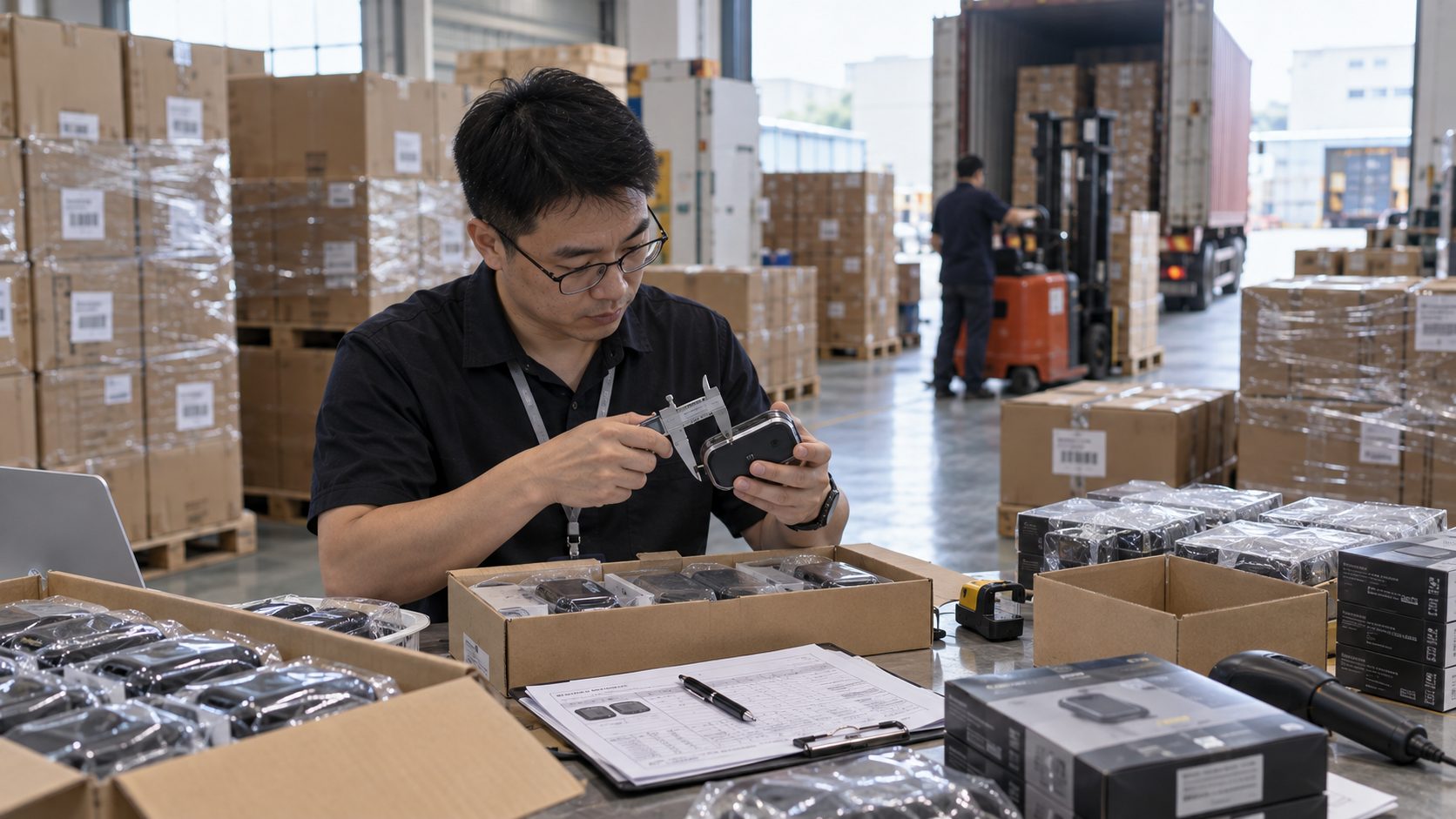
A pre-shipment inspection should be built from the purchase order, approved sample, drawings, artwork, packaging requirements and agreed defect criteria. Check quantity, workmanship, dimensions, function, markings, accessories and packaging. Define the sampling plan and defect classes before the visit, and decide in advance what happens if the result is PASS, FAIL or HOLD.
From the China side
The worst PSI brief is "check quality". It forces the inspector to invent the buyer's standard on the factory floor. If colour, cable length, print position or packaging matters, it belongs in the inspection criteria before the visit.
Practical reference
| PSI check | Source document | Example evidence |
|---|---|---|
| Quantity / assortment | PO + packing list | Carton count, SKU breakdown, sampled cartons |
| Workmanship | Approved sample + defect list | Photos and defect counts by class |
| Dimensions / function | Drawing / specification | Measured values and test result |
| Markings / artwork | Approved artwork | Label, barcode, print position |
| Accessories | BOM / packing specification | Presence, quantity, correct version |
| Packaging | Packing specification | Carton condition, inner pack, shipping marks |
A pre-shipment inspection can be excellent and still be useless if the purchase specification is vague.
The inspector arrives, opens cartons and finds a product that looks acceptable. The buyer later complains that the colour is wrong, the cable is too short and the logo sits 4 mm too high. None of those points appeared in the approved specification.
Inspection cannot recover requirements that were never made measurable.
What should be included in a pre-shipment inspection checklist?
The useful starting documents are usually the purchase order, drawings, approved sample, packaging requirements, artwork, functional requirements and any agreed defect criteria.
The inspection checklist should translate those documents into things that can be checked on site.
- Quantity and assortment
- Workmanship and visible defects
- Dimensions, weight or other measurable characteristics
- Function and basic performance tests
- Markings, labels, barcodes and artwork
- Accessories and components
- Packaging, carton condition and shipping marks
- Any product-specific safety or performance checks that can be performed with the available equipment
When should a pre-shipment inspection be carried out?
Inspecting too early can produce a report on goods that are not representative of the shipment. Inspecting after the container is sealed is obviously too late.
For a conventional pre-shipment inspection, the lot should be sufficiently complete and packed for the inspector to draw a meaningful sample and check packaging. The exact readiness threshold should follow the inspection plan and product, not a ritual percentage copied from another order.
How much of the shipment should be inspected?
Most commercial inspections do not open every unit. They inspect a sample selected from the lot. That reduces cost and time, but it also means the result is statistical evidence about the lot, not proof that every unit is perfect.
AQL-based sampling is often used here. Agree the sampling plan and defect classification before inspection. Do not invent them after the report arrives.
How should inspection defects be classified?
A scratch on an unseen internal surface and a failure that makes a product unsafe should not be treated as equivalent defects.
Defect classes are useful only when they reflect the product and buyer's tolerance. A cosmetic issue can be major for a premium retail product and irrelevant for an industrial component. A missing warning label can be more serious than a visible manufacturing blemish.
If you wait until inspection day to debate classification, the inspector becomes the person writing your quality policy by accident.
What packaging checks belong in a PSI?
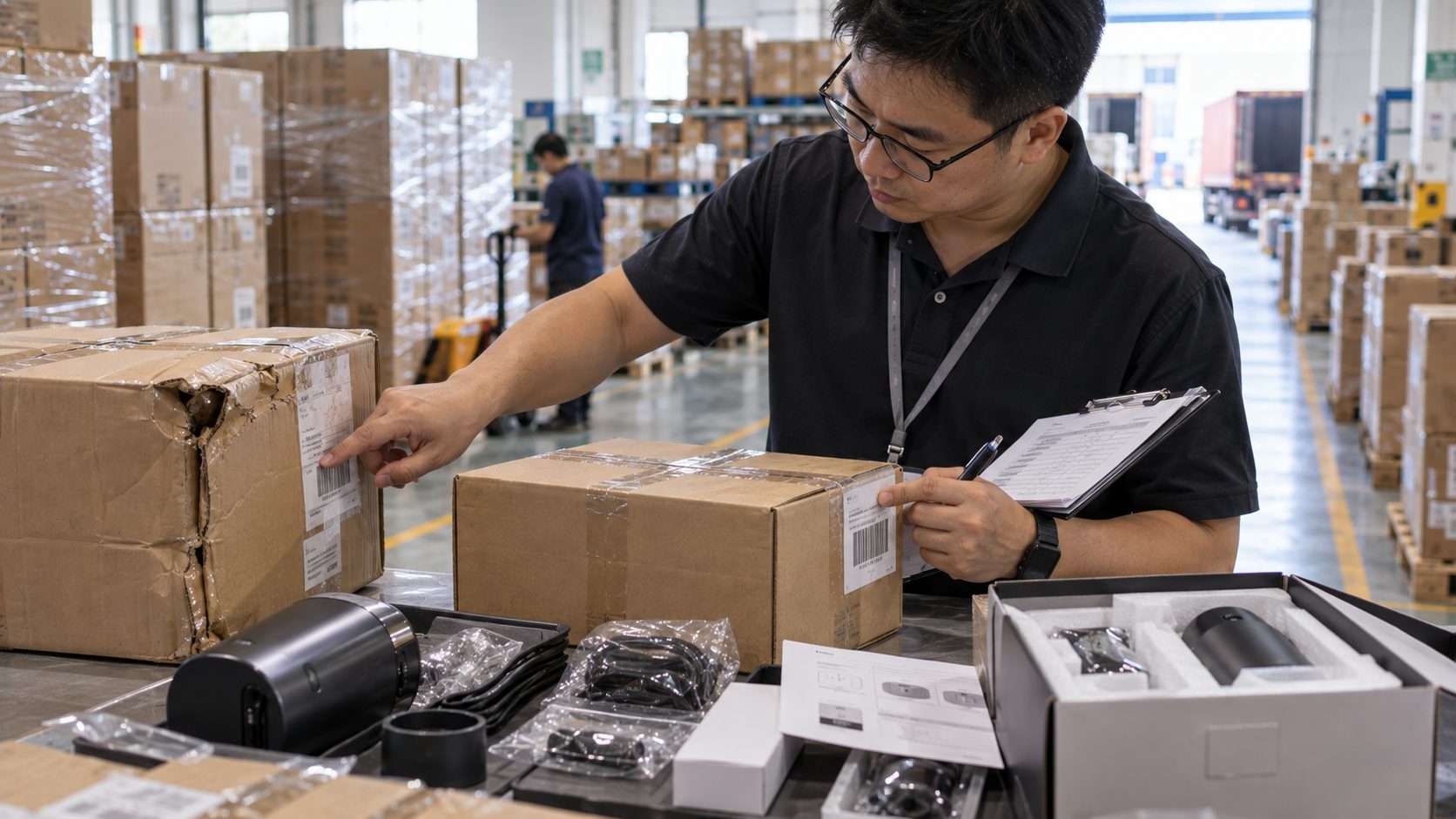
Many expensive shipment problems are packaging problems: mixed SKUs, weak cartons, incorrect labels, missing accessories, wrong quantities, unreadable barcodes or cartons that do not match the packing list.
For e-commerce and retail orders, those errors can survive a perfect product inspection and still create returns, relabelling or warehouse rework.
What should you do after a failed pre-shipment inspection?
A FAIL result does not automatically mean 'cancel the order'. It means the agreed acceptance criteria were not met in the inspected sample.
The next action may be sorting, rework, replacement, a new inspection or commercial acceptance of a known deviation. What matters is that the goods do not quietly ship while the buyer and factory are still arguing about the report.
Need the shipment checked before release? Quality Control →. Related: Production Support
Sources
- ISO 2859 family — acceptance sampling by attributes
- ISO 2859-2 — sampling plans indexed by limiting quality, for isolated lots