Consolidating Orders from Multiple Chinese Suppliers in China
Consolidation saves little if the goods arrive without labels, dimensions, documents or a plan for what happens next.
Quick Answer
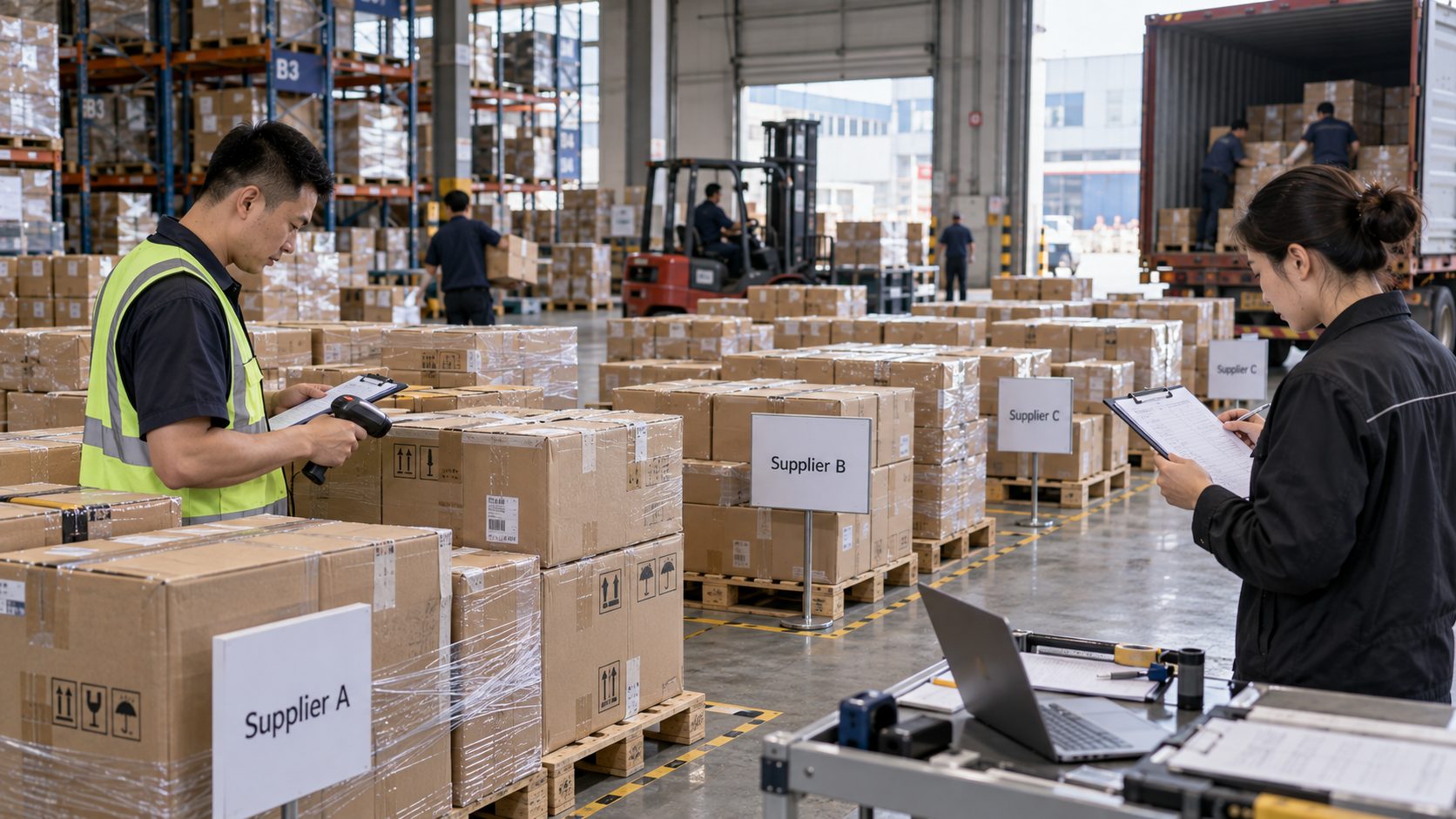
For multi-supplier consolidation, collect packing data before pickup and give every incoming lot a receiving reference tied to the supplier, PO, SKU and expected carton count. Decide whether the warehouse is only receiving goods or also checking, measuring, relabelling, repacking and photographing them. Set a cutoff for late suppliers and plan the export-document structure before dispatch.
From the China side
Consolidation becomes expensive when the warehouse is used as the place where missing information gets discovered. We want carton count, dimensions, weights, SKU breakdown and readiness date before the truck is booked, not after the goods arrive.
Practical reference
| Before pickup | At receiving | Before outbound shipment |
|---|---|---|
| Ready date and pickup contact | Count cartons against receiving reference | Confirm final shipment allocation |
| SKU/carton breakdown | Measure dimensions / weight if required | Reconcile packing list |
| Preliminary dimensions / weights | Record damage or discrepancies | Complete relabelling/repacking |
| Required labels / marks | Photograph and identify incoming lot | Confirm exporter and export documents |
Three factories are ready in the same week. One is in Foshan, one in Dongguan and one in Ningbo. The buyer wants a single shipment.
That sounds like a freight task. In practice, consolidation usually fails earlier: different readiness dates, inconsistent carton marks, missing packing data, goods arriving at the warehouse without a clear receiving instruction.
The warehouse can put cartons in one place. Coordination is what turns them into one shipment.
What does order consolidation in China include?
At the simplest level, goods are collected from several suppliers, received at one facility and dispatched together.
A more useful scope may also include carton count verification, external-condition checks, relabelling, palletisation, repacking, measurement, photography, document collection and coordination of the final export shipment.
Those are different services. Agree them before the first truck arrives.
What information should suppliers provide before consolidation?
Each supplier should provide a packing list or at least reliable preliminary packing data: carton quantity, dimensions, gross/net weight, SKU breakdown and readiness date.
If the numbers arrive only after collection, freight planning becomes guesswork. A shipment that looked like 4.5 cubic metres can become 6.2 after final cartons are measured. That changes vehicle choice, warehouse space and international freight.
How should a consolidation warehouse identify incoming goods?
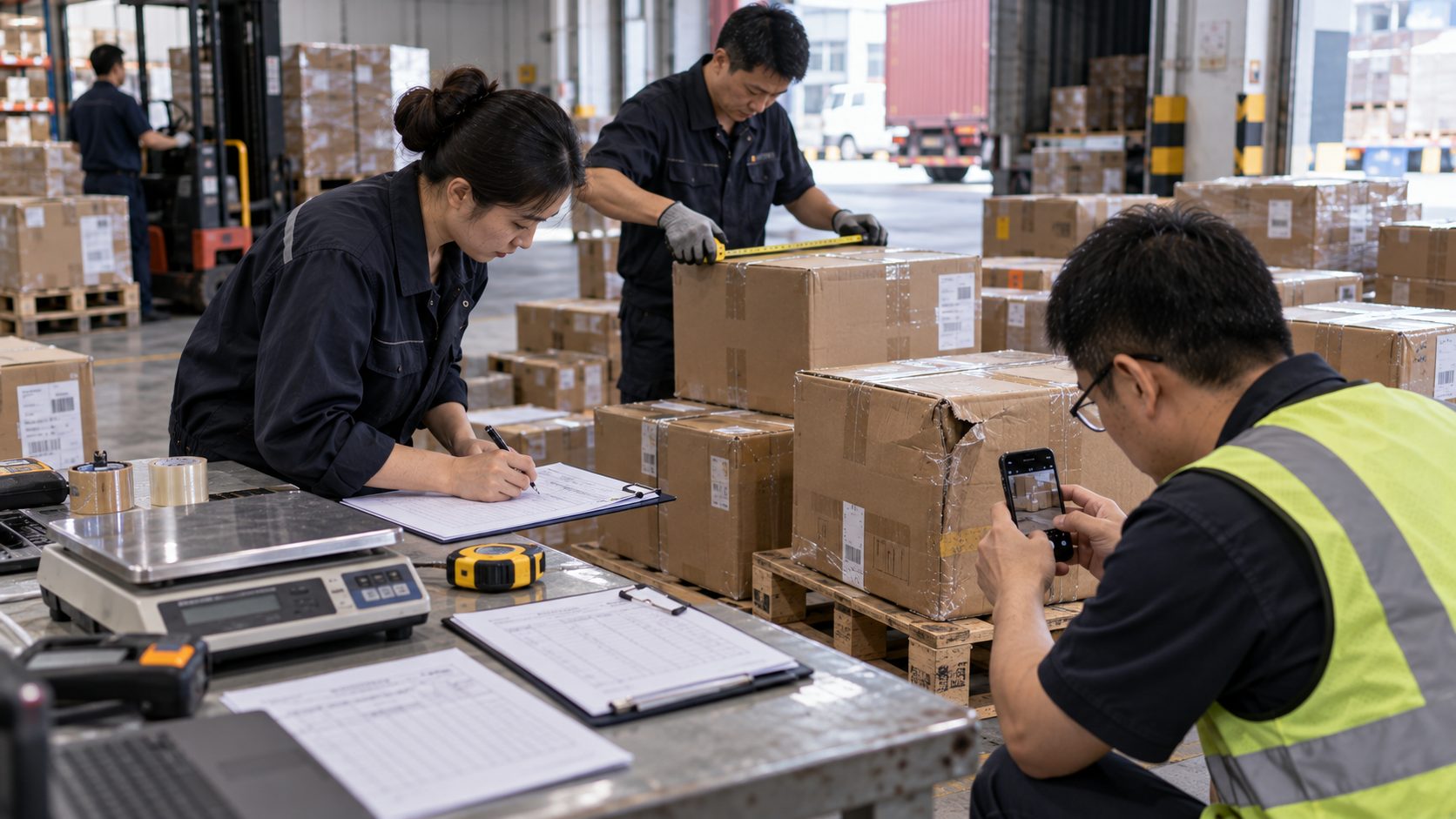
When several factories deliver into one warehouse, every incoming lot should be identifiable without opening a detective case.
A simple receiving reference can tie together supplier, purchase order, SKU and expected carton count. The warehouse then knows what was expected and can report what arrived.
This is especially important when suppliers use generic brown cartons with no English markings.
Does warehouse receiving count as quality inspection?
A warehouse can confirm that 18 cartons arrived and that two are visibly crushed. That is not the same as inspecting the products against the buyer's specification.
If product quality needs to be checked, define a separate inspection scope. Do not assume 'warehouse checked the goods' means the shipment passed QC.
What happens when one supplier is late?
Consolidation creates a scheduling trade-off. Holding two completed orders for a third supplier may reduce freight cost but increase storage time and delay delivery.
Set a cutoff. If Supplier C slips by another ten days, do you wait, split the shipment or send C later?
That decision is easier when the freight saving and commercial cost of delay are visible. 'Ship everything together' should not become an automatic rule.
What documents are needed for a consolidated export shipment?
China Customs declaration can involve contracts, invoices, packing lists, transport documents and other relevant papers. With multiple suppliers, the export structure needs to be clear: who is the exporter, how invoices are handled, which entity appears in the declaration and how the final packing data maps to the shipment.
This is one reason consolidation should be planned with the logistics/export structure, not bolted on after production.
What should a consolidation tracking file contain?
- Supplier and PO reference
- Ready date and pickup contact
- SKU/carton breakdown
- Carton dimensions and weights
- Receiving status
- Damage or discrepancy notes
- Required relabelling/repacking
- Final shipment allocation
- Commercial/export documents received
Once that file exists, consolidation becomes boring. Boring is good. The alternative is a group chat where five people are trying to work out which 12 cartons arrived yesterday.
Coordinating several suppliers? Logistics & Consolidation →. If several factories also need schedule and production coordination, Production Support →
Sources
- China Customs — declaration documents (contract, invoice, packing list, manifest, bill of lading/waybill)
- China Customs Law — exporter/importer declarations and customs agents