How to Find a Manufacturer in China Without Relying on Alibaba
Alibaba is a useful directory. The mistake is treating the directory as the market.
Quick Answer
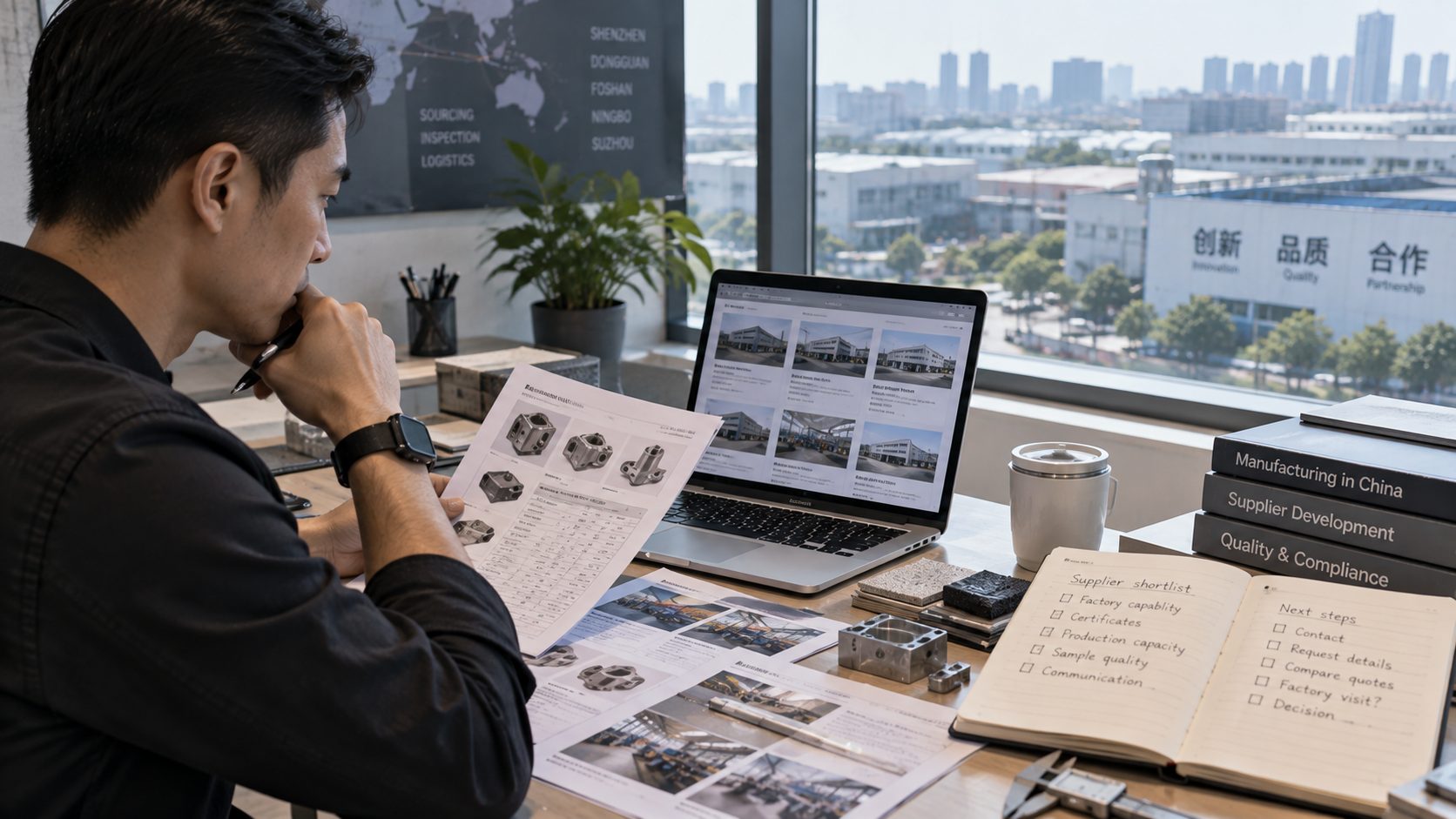
Start with a precise sourcing brief, then search across several channels: export marketplaces, Chinese-language sources, industry directories, trade fairs, industrial clusters and referrals. The hard part is not collecting company names. It is forcing every candidate to quote the same product, quantity, packaging and commercial basis so that price and capability can be compared properly.
From the China side
We would rather have four comparable quotations than twenty screenshots. A long supplier list looks productive, but it often hides the fact that each company has priced a slightly different product.
Practical reference
| Shortlist field | Why it matters |
|---|---|
| Specification match | Prevents comparing different products under the same description |
| In-house processes | Shows which capabilities belong to the supplier and which are subcontracted |
| MOQ / tooling | Reveals the real cost of starting the order |
| Lead time / capacity | Tests whether the commercial promise fits the production plan |
| Packaging / export basis | Makes quotations comparable beyond unit price |
| Open questions | Shows what still needs verification before selection |
Search Alibaba for a common industrial product and the first problem is not lack of choice. It is the opposite: pages of suppliers that look strangely similar.
The same photographs appear under different company names. Product ranges overlap. One supplier calls itself a factory, another an OEM specialist, a third a 'manufacturer & trading company'. Price gaps are large enough to be interesting but not large enough to explain what is different.
Alibaba is good at showing you suppliers who want to be found by overseas buyers. It is not a complete map of Chinese manufacturing.
What should you define before searching for manufacturers in China?
Before searching for companies, define what kind of producer you need. A buyer asking for 'stainless steel bottle manufacturer' will get a different shortlist from a buyer who specifies 304 steel, double-wall vacuum construction, powder coating, laser marking, target capacity, packaging, annual volume and destination market.
This sounds obvious, but vague briefs create fake choice. Ten quotations for ten slightly different products are not ten comparable suppliers.
A useful sourcing brief normally fixes the non-negotiables first: material, critical dimensions, performance, finish, certification or compliance requirements, packaging, expected quantity and what can still change.
Where can you find Chinese manufacturers besides Alibaba?
For export-oriented products, Alibaba may be the quickest starting point. For domestic-market suppliers, Chinese-language platforms and industry directories can expose companies that invest little in English-language marketing. Trade fairs remain useful when the product benefits from physical comparison. Existing supplier networks, industrial clusters and referrals can be faster still.
None of these channels is automatically 'better'. They produce different candidate pools.
After discovery, normalise the information. Ask every candidate for the same specification, quantity and commercial basis. Otherwise the cheapest quote may simply exclude something the expensive quote included.
How do you compare Chinese supplier quotations properly?
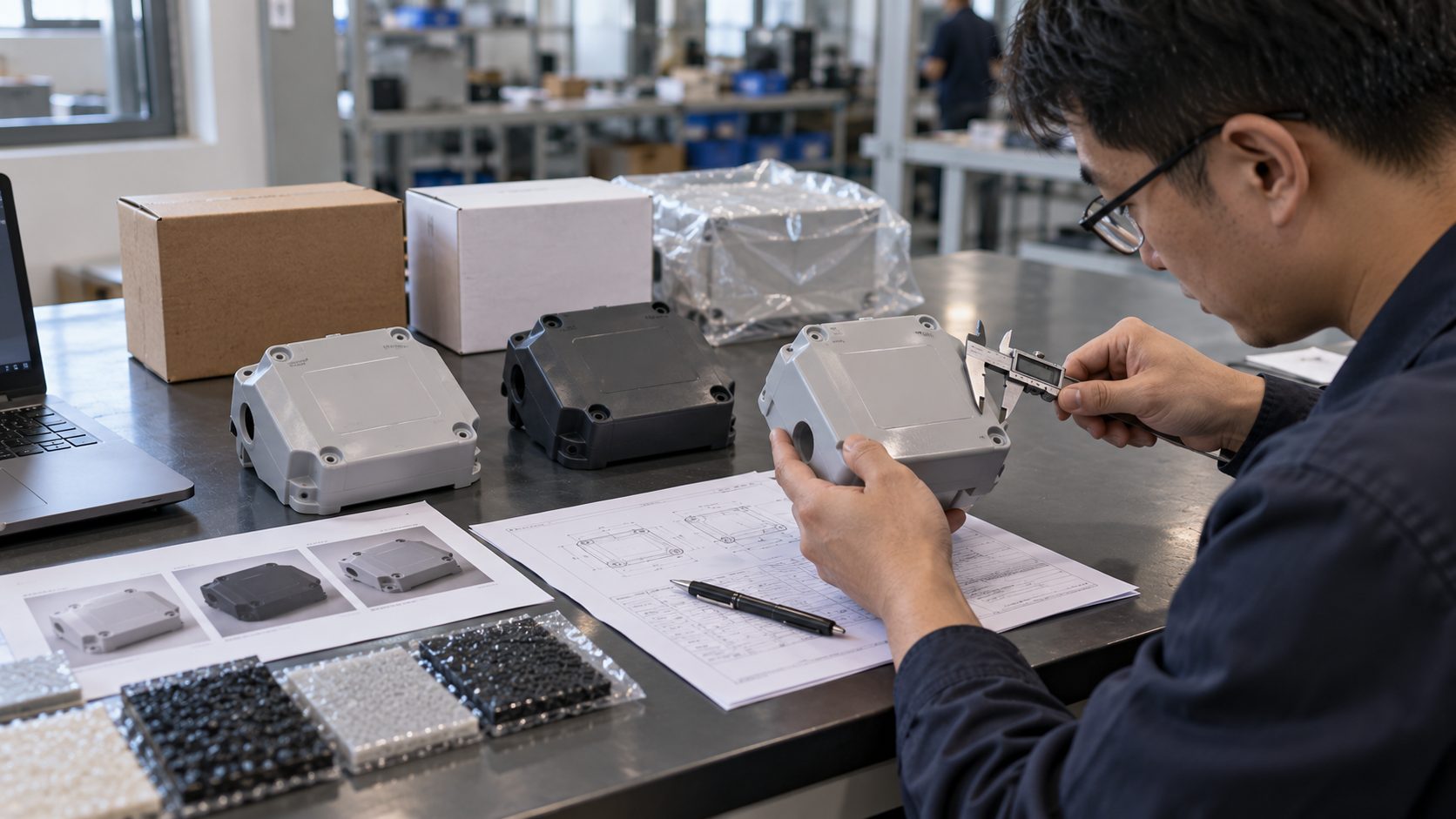
Imagine three factories quoting a moulded plastic enclosure. Supplier A is 18% cheaper. The drawing looks the same, but A has assumed a recycled resin blend, a different surface finish and bulk packing. Supplier B included virgin material and individual protective bags. Supplier C included tooling maintenance in the unit price.
There is no meaningful 'lowest price' until those assumptions are visible.
This is why sourcing work should produce a comparison, not a folder of screenshots. Unit price matters, but so do tooling, MOQ, sample cost, lead time, payment terms, packaging, export experience and what the factory makes in-house.
Does fast communication mean a supplier is a good manufacturer?
Fast English is pleasant. It is not production capability.
Some excellent factories are slow before an order and disciplined after one. Some excellent sales teams represent factories you would never approve. Communication quality belongs in the decision, but it should not silently become the decision.
Ask questions that force operational answers: Which processes are in-house? Which are subcontracted? What is the normal production lead time at this quantity? What inspection equipment is used for the critical dimension? Can the factory show the line running a comparable product?
When is Alibaba enough for supplier sourcing?
For a standard, low-risk product, a marketplace shortlist may be entirely adequate. There is no virtue in making sourcing complicated.
Go wider when the product is custom, the order value is material, the supplier pool looks repetitive, the required process is specialised, or the best candidates appear to be intermediaries rather than the actual producers.
What should a good manufacturer shortlist contain?
A good shortlist is not ten companies. It is usually a small number of candidates with the reasons for keeping each one: capability, commercial fit, evidence, open questions and the next thing that needs to be checked.
That makes the next stage much easier. You can verify two or three serious candidates instead of performing shallow due diligence on twenty.
Need help comparing manufacturers? China Sourcing Agent →. Related reading: Manufacturer or Trading Company?